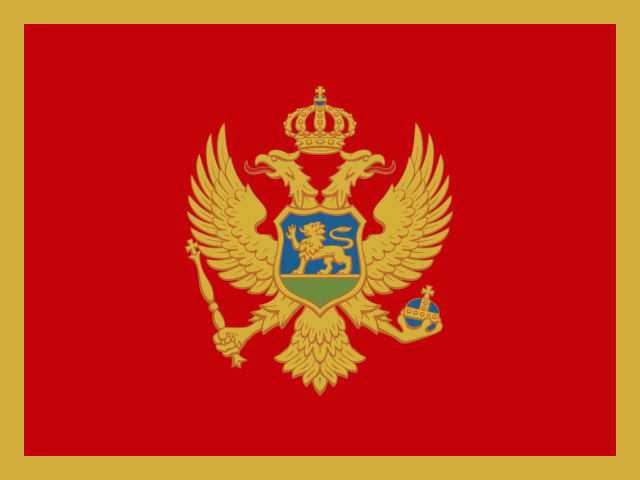
Montenegro
A solid all-round choice. Ranked 32 of 40, strongest on affordability, softest on retiree visa.
Key facts
Visa & residency
Retirees can qualify for residence with proven income of about 1,800 euros per month; the property-ownership route requires owning real estate worth at least 200,000 euros.
Montenegro has no dedicated retirement visa. Retirees stay via a one-year renewable temporary residence permit granted on grounds such as real estate ownership, family reunification or proven means of subsistence with accommodation and health insurance. After five years a permanent residence permit is possible.
Healthcare
Public healthcare is functional but underfunded with long waits and language barriers; private clinics such as Medico Policlinic in Podgorica offer care closer to Western European standards at lower cost.
Most expats and retirees take international or private health insurance rather than relying on the public system, ensuring multilingual staff and quicker access.
Cost of living
Low; a single person needs roughly 614 euros per month excluding rent, so about 1,000 to 1,400 euros all-in in a coastal city.
A one-bedroom apartment averages about 573 euros per month in the city centre and about 421 euros outside the centre.
Safety & climate
Montenegro ranks 30th of 163 countries in the Global Peace Index with a score of 1.672, placing it among the more peaceful nations.
The coast has a Mediterranean climate (Koppen Csa) with hot dry summers and mild humid winters, while the northern mountains are continental with cold winters.
Community & language
The expat community is modest at roughly 15,000 to 20,000 people, concentrated in coastal towns like Budva, Kotor and Tivat. English is growing in tourist areas and among younger people but is patchy in public services and rural regions.
Montenegrin is the official language; Albanian, Bosnian, Croatian and Serbian are also in official use.
Taxes
Tax residents are taxed on worldwide income, so foreign pensions are generally taxable unless relieved by a treaty. Personal income tax is progressive: 0% up to 700 euros gross monthly, 9% from 700 to 1,000 euros, and 15% above 1,000 euros.
Montenegro has an extensive network of double tax treaties; where a treaty applies, double taxation is eliminated by the credit or exemption method it prescribes, and without a treaty residents get a foreign tax credit up to the Montenegrin tax due.
EUR (Euro), adopted unilaterally; Montenegro is not a member of the Eurozone
Compare Montenegro with its closest rivals
The three countries whose RetireScore sits nearest.