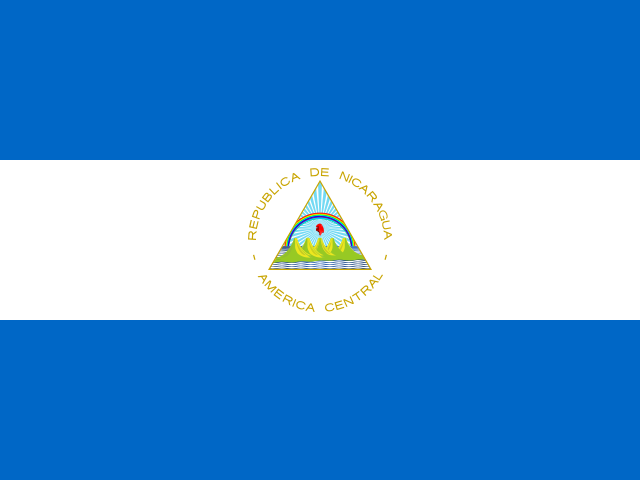
Nicaragua
A solid all-round choice. Ranked 28 of 40, strongest on affordability, softest on safety.
Key facts
Visa & residency
Pensionado (retiree residency); a related Rentista option exists for non-pension investment income.
Pensionado requires about $600/month from a guaranteed source such as a pension or Social Security; Rentista requires about $750/month from investments, with an extra $150/month per dependent.
The pensionado income must come from a guaranteed source (pension, retirement fund, Social Security); an extra $150/month is required for each dependent. Requirement figures vary between sources, so applicants should confirm current thresholds with Nicaraguan immigration.
Healthcare
Good private care is concentrated in Managua (e.g. the JCI-accredited Vivian Pellas Metropolitan Hospital, plus Hospital Bautista and the Military Hospital); routine public visits are free. The U.S. State Department warns that medical services are severely limited outside Managua, with only one internationally certified hospital in the capital.
Traditional health insurance is largely unavailable; Vivian Pellas offers tiered membership programs (about $50-$65/month for the Gold package, giving 20-70% discounts). Expats are advised to buy MedEvac insurance (about $250/year) for emergency air transport to Houston or Miami.
Cost of living
Many couples live comfortably on about $1,500/month; a single person around $1,200/month, with budget living possible near $800 and a high-end lifestyle around $2,000/month.
A nice one-bedroom furnished house or apartment runs about $300-$400/month; premium ocean-view two-bedroom homes with pools rent for roughly $800-$1,000/month.
Safety & climate
U.S. State Department rates Nicaragua Level 3 (Reconsider Travel), citing violent crime that can occur anywhere, serious risk of wrongful detention of U.S. nationals by the authoritarian government, arbitrary enforcement of laws targeting perceived opponents, and limited medical services.
Two seasons: a pronounced dry season (December-April on the Pacific side) and a rainy season (May-October). In Managua highs range from about 32°C (90°F) to 37-38°C (98-100°F) March-May, with nightly lows around 18-20°C. The Caribbean coast is far wetter (3,000-4,000 mm/year) than the Pacific side; highland areas are cooler.
Community & language
Granada is one of Nicaragua's most established expat communities (estimated several thousand foreign residents, mostly from the US and Canada plus some Europeans), alongside San Juan del Sur. English functions mainly within tourist and expat-oriented sectors; Spanish is needed for broader daily life and integration.
Spanish is the official language; English, Miskito, Rama and several Creole languages are recognized regional languages, particularly on the Caribbean coast.
Taxes
Nicaragua's tax system does not recognize any form of foreign tax credit, so there is no domestic mechanism to offset foreign taxes on pension income.
Nicaragua has not signed any general treaty to avoid double taxation with any country (a December 2022 Air Transport Agreement with Mexico contains only sector-specific double-tax rules). There is no US-Nicaragua tax treaty.
Compare Nicaragua with its closest rivals
The three countries whose RetireScore sits nearest.